Accessible doorways are a cornerstone of inclusive design — especially for people using wheelchairs, mobility scooters, and other mobility aids. While automatic doors and ADA standards help remove basic barriers, many daily safety challenges remain for those with mobility devices. Understanding these issues is essential for designers, property owners, and hospitality leaders who want to create truly inclusive environments.
In this article, we explore the real-world perspectives of individuals with mobility challenges and how tools like the ProPPiT improve safety around automatic and manual doors — making hospitality spaces more welcoming and secure for everyone.
1. Automatic Doors: A Step Toward Accessibility, But Not a Complete Solution
Automatic doors are a major improvement over heavy manual doors because they eliminate the need for physical effort to enter and exit buildings — a key benefit for wheelchair users and people using mobility scooters. These doors can often be triggered without contact using sensors, push pads, or mobility-integrated systems, which helps users maintain independent movement.
However, automatic doors alone don’t solve all accessibility challenges:
- Sensors may not always pick up smaller wheelchairs or scooters, requiring users to trigger them manually.
- Automatic doors still move — opening and closing — which can pose safety risks if a user is caught in the swing path or moving slowly through the threshold.
Many facilities do not install automatic doors at every doorway, leaving gaps in accessibility.
2. The Real Safety Concerns People Using Mobility Devices Face
Even with ADA standards, door access can create risk and frustration:
🧑🦽 Narrow Door Widths
Although ADA guidelines recommend a clear width of at least 32 inches, many older buildings, restrooms, and secondary doors still fall short — making maneuvering difficult or impossible for wider wheelchairs and scooters. ADA National Network
🌀 Poor Maneuvering Space
Approaching a doorway with insufficient clearance makes it tough to align a wheelchair or scooter, especially near closing doors or in tight corridors. ADA National Network
⚠️ Door Movement Hazards
Automatic doors can close quickly, potentially catching mobility devices or users in motion. In other cases, they fail to stay open long enough for slow-moving individuals, increasing stress and risk of injury.
These issues aren’t just theoretical — qualitative studies show that people with disabilities often encounter inaccessibility that feels like discrimination, even when minimum ADA standards are met.
3. Why ProPPiT Matters: A Mobility Safety Tool for Every Doorway
This is where ProPPiT becomes an essential part of a comprehensive accessibility strategy.
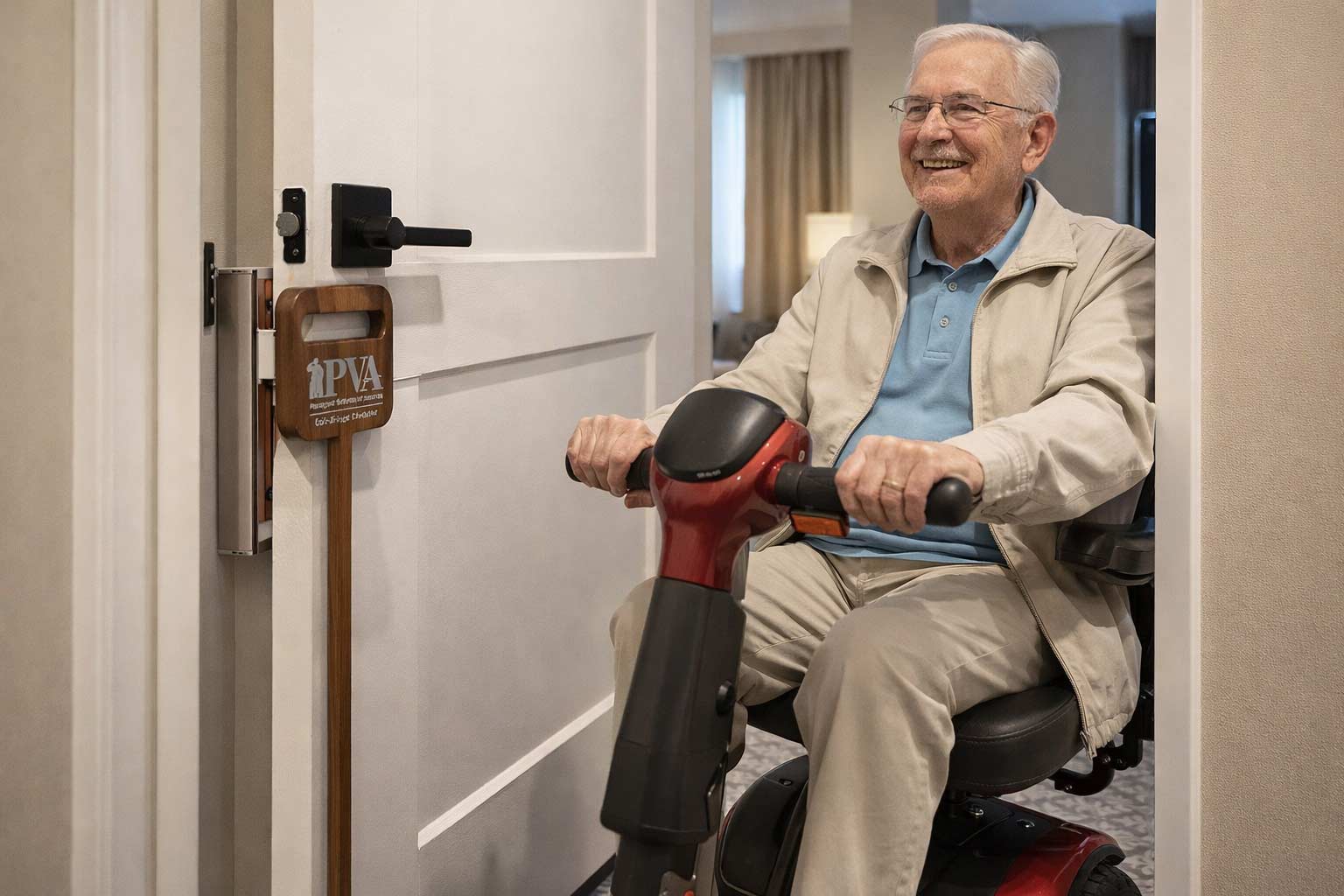
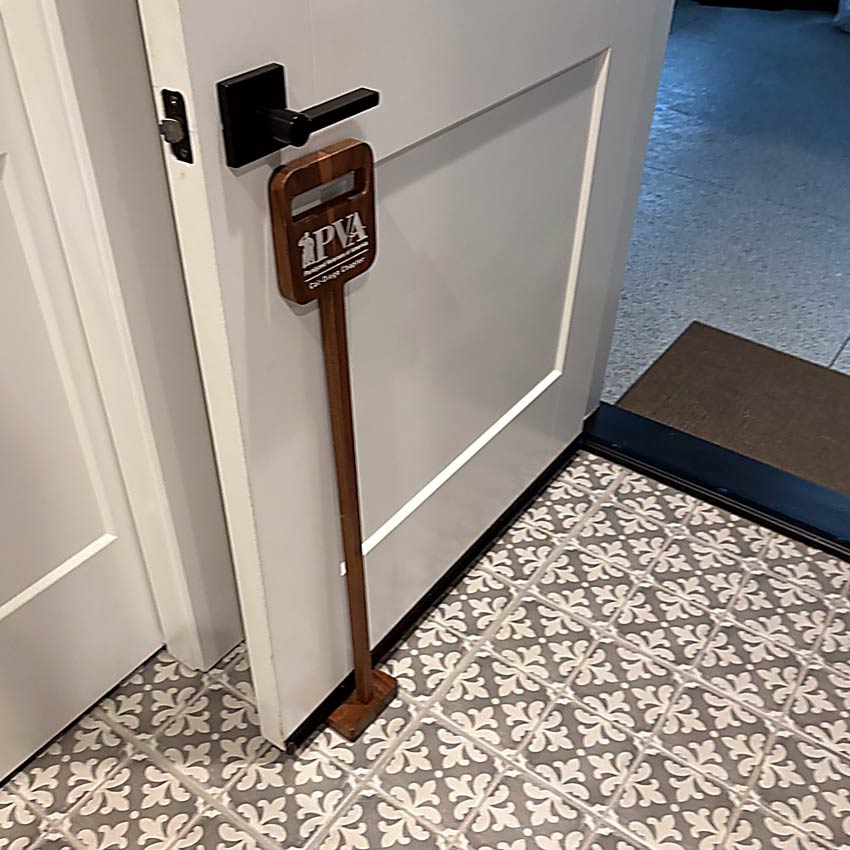
ProPPiT is a durable, beautifully designed mobility safety tool that can be mounted discreetly near doorways to:
✅ Stabilize doors preventing accidental closure while a mobility device is in passage
✅ Protect users from pinch points where wheels or hands could be caught
✅ Provide a consistent, easy-to-reach safety anchor beside both automatic and manual doors
Unlike automatic doors, which rely on sensors or power systems, ProPPiT provides a steady, human-centered solution that enhances safety in real-world use — especially where doors are heavy, transitional, or likely to close quickly.
4. Beyond Minimum Standards: What True Safety Looks Like
Automatic doors and ADA guidelines set the foundation for accessibility — but true safety and independence requires a deeper understanding of user experience:
Ensuring clear approach space and maneuvering room around doors
Considering users of larger wheelchairs and scooters
Integrating tools like ProPPiT at key doorways, bedrooms, and restrooms
Educating staff and designers on universal design principles that benefit everyone, from wheelchair users to aging guests to parents with strollers PMC
By addressing these real-world challenges, designers and hospitality leaders demonstrate that they aren’t just meeting the law — they are going above and beyond to create inclusive, dignified spaces for everyone.
Accessibility Is About Independence — Not Just Access
Automatic doors play an important role in removing barriers, but they don’t eliminate all safety concerns for people using wheelchairs or mobility devices. True accessibility means creating environments where every guest can move confidently and independently.
Mounting a ProPPiT near key doors adds an extra layer of safety and control for users — especially where doors are automatic, heavy, or in transitional zones.
Accessibility is not just a legal requirement — it’s a competitive advantage in hospitality and design. And when safety tools are thoughtful and intentional, everyone benefits.
Explore how ProPPit enhances safety and dignity for mobility device users at ProPPit.net — where accessible innovation meets elegant design.
More Accessibility Topics: